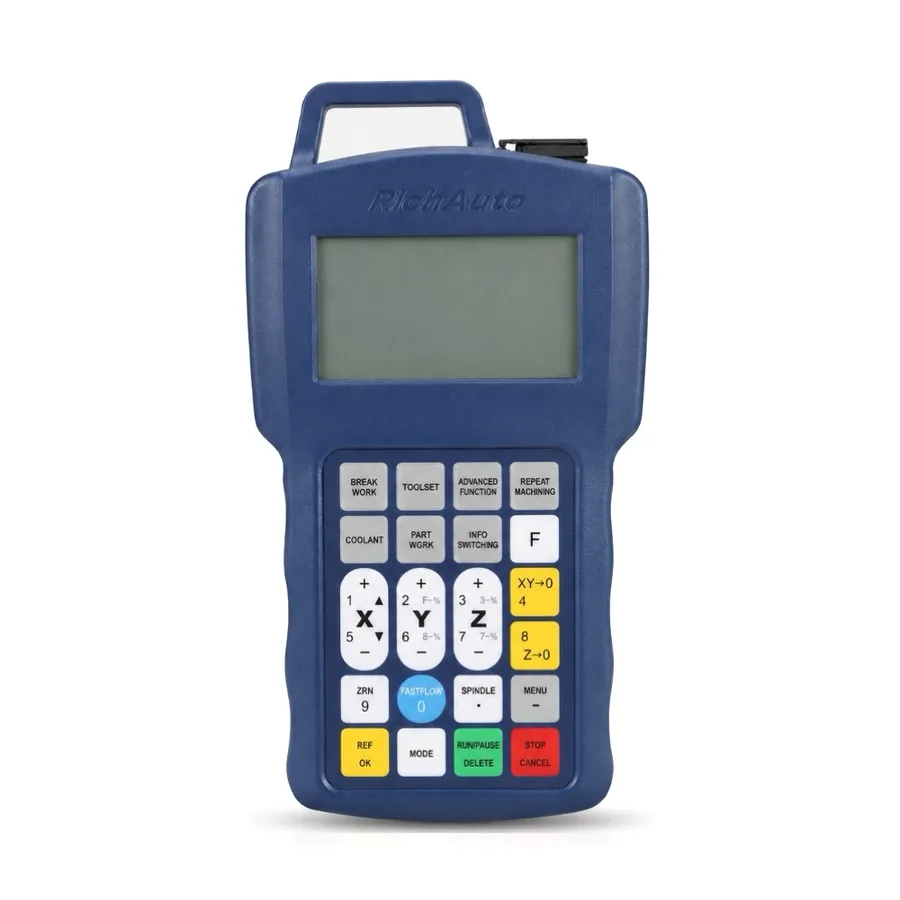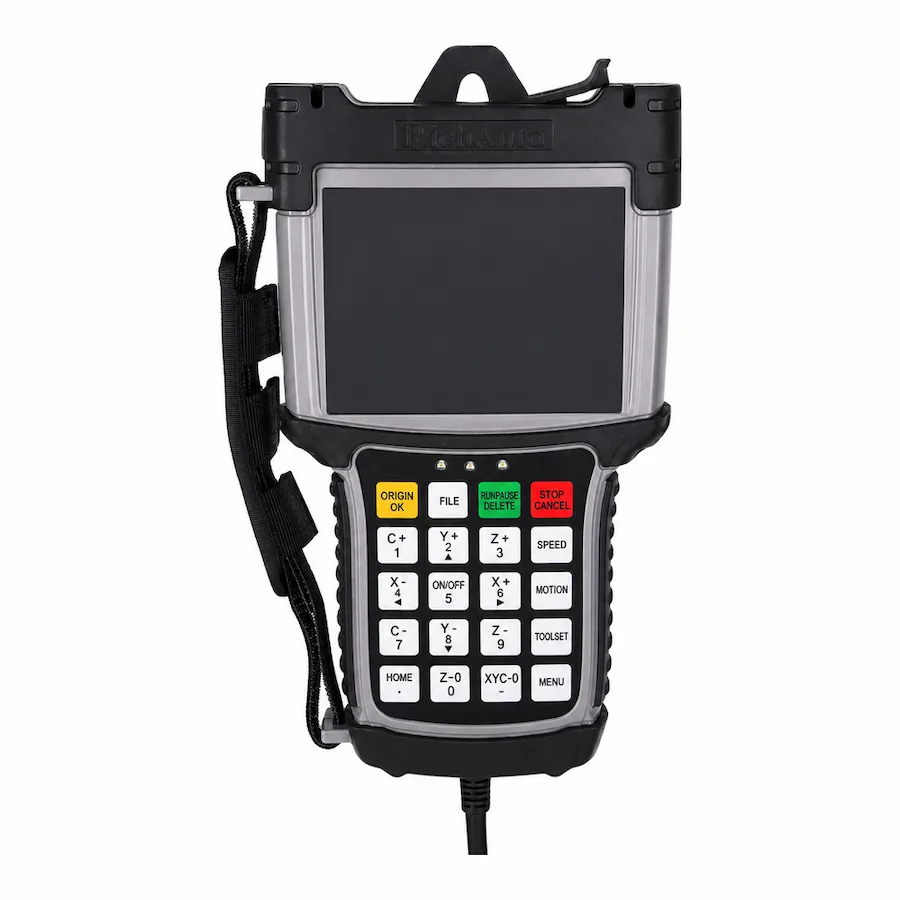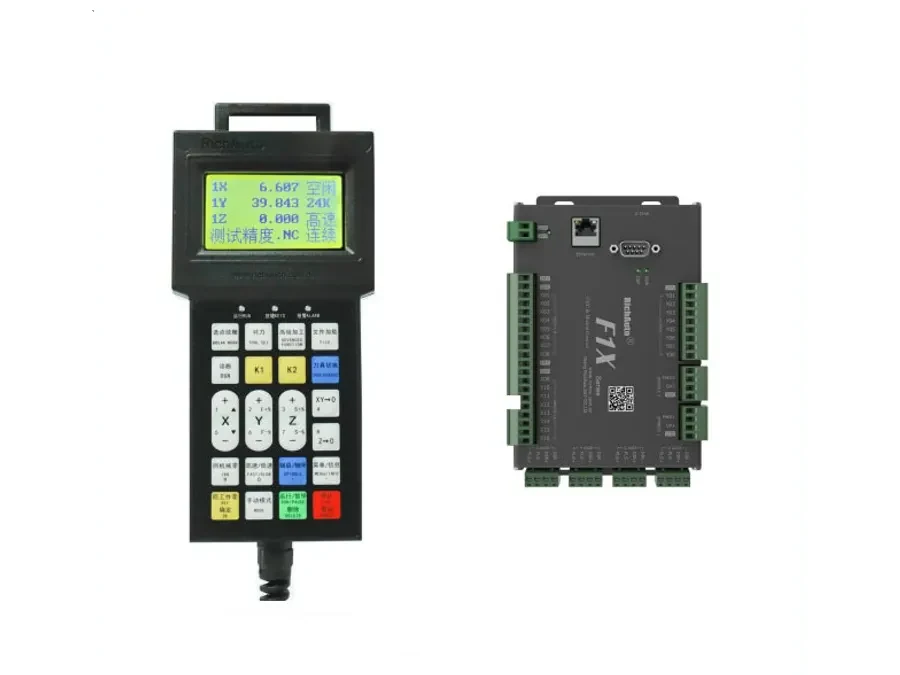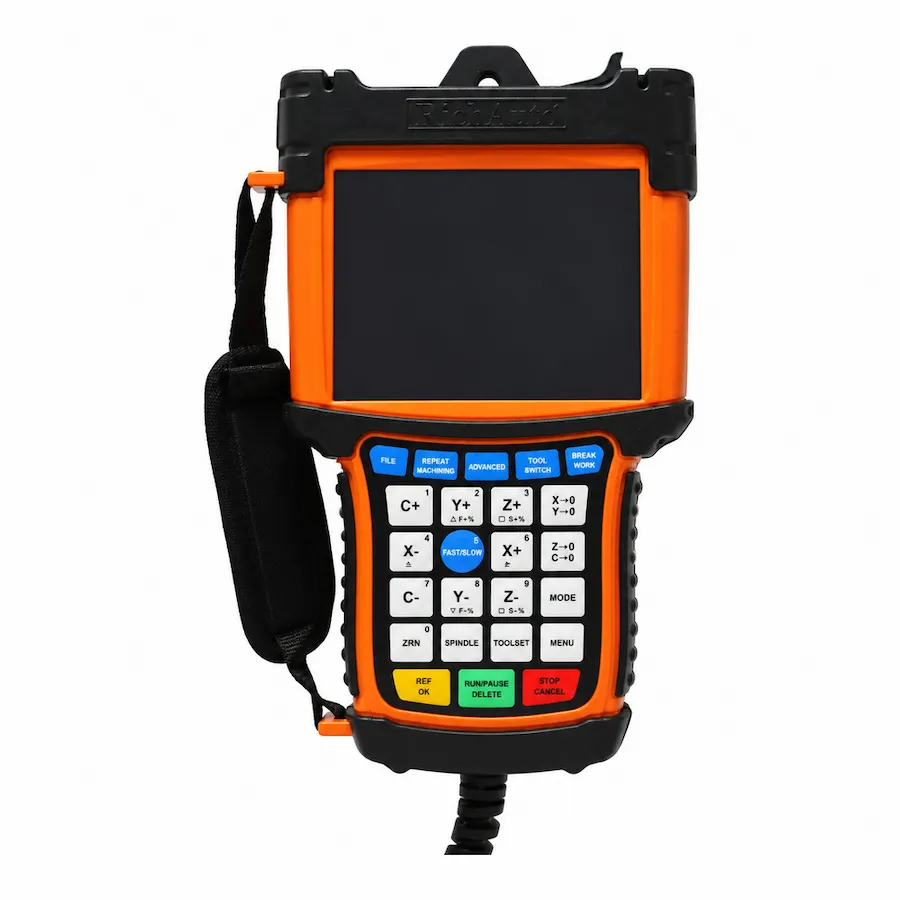
RichAuto B11, B51 and F131 are all relevant to conventional three-axis CNC machines, but they should not be treated as interchangeable handheld controllers. The selection should reflect the machine’s display preference, required I/O, control-board arrangement and the functions that must continue to work after installation.
B11: Compact 3-Axis DSP with Spline Interpolation
The B11 is a B-series handheld DSP controller for standard three-axis routing and engraving work. It includes spline interpolation, nine workpiece coordinates and breakpoint positions. It may be considered alongside A1X-family equipment only after the interface board, pinout, signal, power and wiring have been checked for the actual machine.
B51: Color Display and Configuration-Dependent Options
The B51 is positioned for three-axis CNC work with a 5-inch color screen and toolpath preview. Its expanded-board and handwheel capabilities depend on the supplied configuration, so those features must be confirmed from the actual board and machine requirements. A color display alone does not establish compatibility with an existing cabinet.
F131: Industrial I/O and a Larger Keypad
The F131 is an industrial three-axis controller with a 16-input/8-output board and 24-key keypad. It is relevant where the machine requires more I/O and a larger operating interface than a compact handheld platform. The installed drive signals, alarm circuits, limit switches, tool-setting circuit and auxiliary functions should be compared with the intended F131 board before installation.
A Practical Selection Checklist
Start with the machine application and confirm that a conventional three-axis controller is appropriate. Then record the existing controller label, interface-board photos, terminal labels, power arrangement, drive type, I/O list and cabinet wiring. If the machine needs a fourth axis, ATC, plasma, dispensing or networked PC control, compare a controller intended for that machine architecture instead of extending a three-axis platform.
For replacement work, preserve the existing parameters and wiring evidence before disconnection. CINKR can use those details to evaluate the practical controller fit before quotation.